
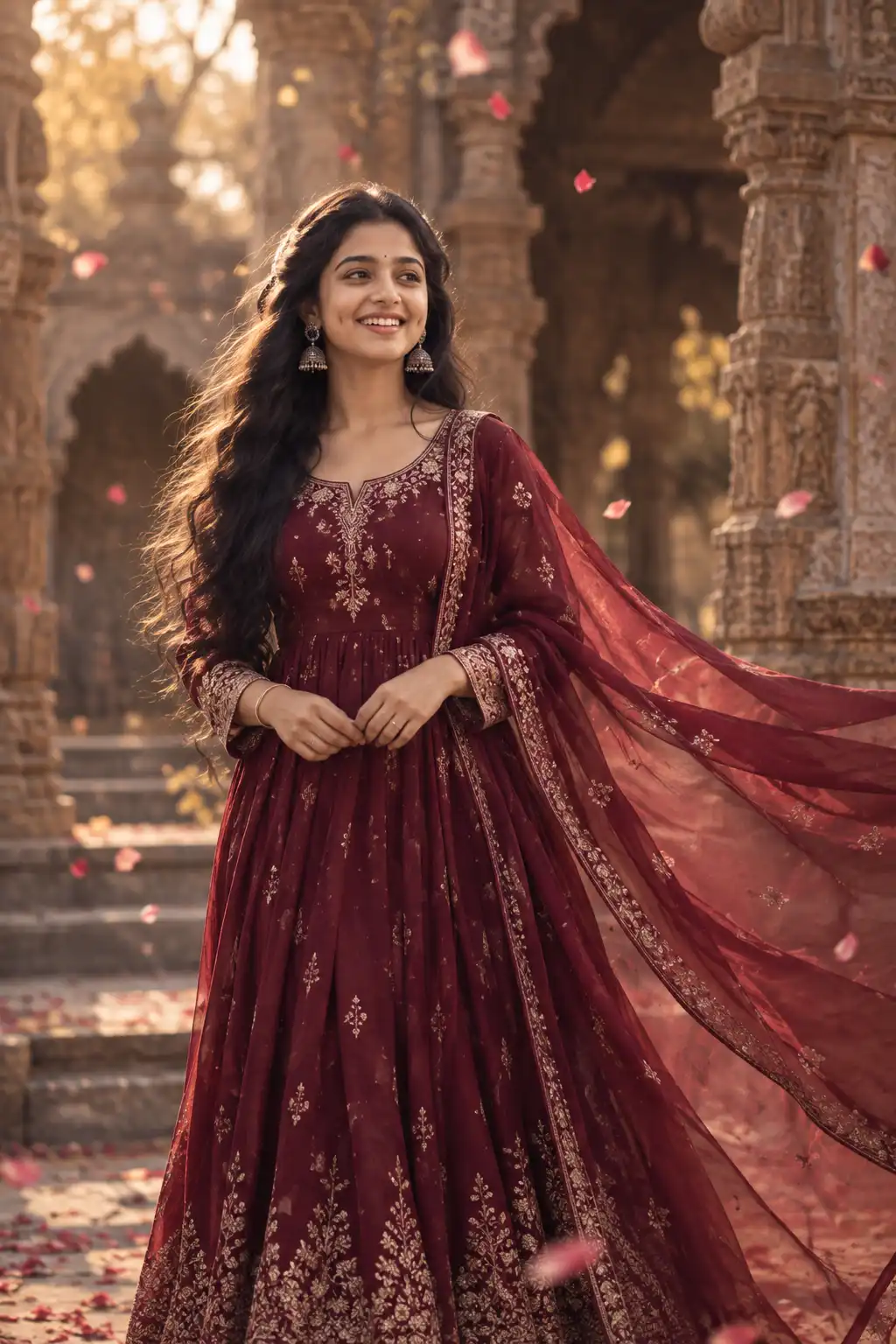
🏛️ South Asian Palace Double-Exposure Portrait Prompt
Create an ultra-realistic, high-resolution cinematic South Asian fashion portrait using the uploaded user photo as the ONLY source of the final subject’s identity.
USER IDENTITY — HIGHEST PRIORITY
The uploaded user photo is the sole identity reference for the person in the final image.
Preserve the user’s recognizable identity as accurately as possible, including facial structure, facial proportions, face shape, forehead, hairline, eyebrows, natural eye shape and spacing, nose, lips, cheeks, cheekbones, jawline, chin, skin tone, natural skin texture, hair characteristics, and all other distinctive identity-defining facial features.
Do NOT copy, transfer, or reproduce the reference subject’s facial identity or facial features.
Do NOT replace the user with a different person.
Do NOT beautify, reshape, slim, widen, masculinize, feminize, age, de-age, or otherwise redesign the user’s face.
Preserve the user’s natural facial characteristics and recognizable appearance.
The user’s original facial expression, gaze, and head pose from the source photo must NOT be transferred.
If any creative instruction conflicts with identity preservation, USER IDENTITY PRESERVATION MUST TAKE PRIORITY.
REFERENCE IMAGE — VISUAL GUIDE ONLY
Use the reference image only as a visual guide for:
– pose
– body positioning
– head orientation
– expression
– gaze direction
– clothing
– hairstyle as styling
– accessories
– architecture
– lighting
– atmosphere
– composition
– framing
– double-exposure effect
– color palette
– overall photographic style
Do not use the reference image as a source of the person’s identity.
The final person must always remain the user shown in the uploaded user photo.
SUBJECT & POSE
Recreate the reference as a highly detailed cinematic South Asian fashion portrait in a vertical 2:3 composition.
Show the user as the main full-body subject standing gracefully in an ornate historic South Asian temple/palace courtyard.
Maintain the user’s identity and natural appearance while adapting the reference pose naturally to the user’s anatomy.
Position the main subject slightly left of center, occupying most of the lower and middle portion of the frame.
The body is positioned in a graceful three-quarter orientation.
The torso is angled slightly toward the right side of the image while the face turns gently toward the left/front, following the reference pose.
Keep the posture elegant and relaxed, with naturally lowered shoulders and an upright torso.
One arm is softly bent in front of the waist, with the hands resting naturally together near the midsection.
Reproduce the reference’s overall standing posture and body positioning while maintaining realistic anatomy and natural proportions.
EXPRESSION & GAZE
Recreate the reference’s emotional behavior on the user’s identity.
Give the user a soft, pleasant, confident expression with a subtle natural smile, relaxed cheeks, gently lifted mouth corners, calm eyes, and a warm serene emotional mood.
The eyes should gaze slightly toward the left side of the frame rather than directly into the camera.
Recreate the reference’s gentle head rotation and slight natural head angle.
Do NOT use the expression, gaze, or head position from the user’s source photo.
The expression must be applied naturally to the user’s own face without changing facial identity.
OUTFIT
Dress the user in the same visual style of flowing deep burgundy/maroon traditional South Asian Anarkali-style gown shown in the reference.
The outfit is floor-length, richly pleated and voluminous, with a fitted upper bodice and long sleeves.
Add intricate antique-gold floral embroidery along the neckline, sleeve cuffs, front and lower hem, and decorative borders.
Include a matching sheer maroon dupatta flowing dramatically from the body toward the right side of the frame.
The dupatta should create a large sweeping translucent fabric shape with delicate embroidered edging.
Preserve realistic fabric weight, folds, textile texture, embroidery detail, translucency, and physically believable movement.
JEWELRY & HAIR STYLING
Add ornate traditional silver-toned jhumka earrings and a coordinated decorative hair accessory matching the reference styling.
Keep the user’s own hair characteristics and natural hairline wherever visible.
Do not use the reference person’s hairline or facial structure to redefine the user’s identity.
If appropriate to the reference styling, add a tiny maroon/red bindi centered naturally on the forehead.
The bindi must not alter the user’s facial structure or recognizable appearance.
ARCHITECTURAL ENVIRONMENT
Set the scene inside an ancient ornate South Asian architectural courtyard.
Include richly carved stone pillars, weathered carved walls, temple-inspired arches, stone steps, decorative masonry, and historic architectural details.
Cover the upper-left and side architectural areas with abundant vivid pink and magenta bougainvillea flowers mixed with natural green foliage.
Scatter numerous delicate pink flower petals naturally across the stone floor and gently through the air around the subject.
In the distant background, show softly blurred historic towers, arches, carved structures, and warm sunlit architecture.
Keep the environment authentic, elegant, atmospheric, and visually rich without becoming cluttered.
DOUBLE-EXPOSURE COMPOSITION
Recreate the distinctive cinematic layered photographic composition from the reference.
Behind and above the main full-body figure, create a large semi-transparent close-up portrait of the SAME USER.
The enlarged portrait must use the user’s identity from the uploaded user photo.
It must NOT reproduce the reference person’s facial identity or facial structure.
The large portrait should occupy much of the upper-right portion of the frame.
Apply the reference-derived expression, warm smile, relaxed eyes, sideways gaze, and similar head orientation to the user’s own face.
The enlarged portrait should be highly recognizable as the same user while remaining visually consistent with the main figure.
Blend the enlarged portrait softly into the warm architectural background and sunlight.
The edges should gradually dissolve into the environment, creating an intentional cinematic double-exposure effect rather than the appearance of a pasted or duplicated photograph.
Both the main figure and enlarged portrait must represent the SAME USER.
GOLDEN-HOUR LIGHTING
Use warm golden-hour backlighting coming from the upper-left/center background.
Create glowing rim light around the user’s hair, shoulders, and flowing fabric.
Add luminous amber highlights, gentle lens glow, soft atmospheric haze, subtle volumetric sunlight, realistic shadows, and warm highlights across the stone architecture.
Allow the pink bougainvillea flowers and scattered petals to catch subtle touches of sunlight.
Maintain harmonious colors across:
– deep maroon
– antique gold
– warm amber
– stone brown
– natural green
– vivid pink
– soft architectural neutrals
Keep the lighting physically believable and photographic.
CAMERA & OPTICAL REALISM
Use a vertical 2:3 composition.
Use approximately 50mm lens perspective for the main figure.
Frame the full body from the top of the hair to the feet while leaving enough space around the flowing gown and dupatta.
Position the camera approximately at natural eye-to-chest height with a subtle cinematic perspective.
Avoid extreme wide-angle distortion.
Keep the main figure sharply detailed.
Allow the distant architecture to gradually soften with moderate depth of field.
Keep the enlarged facial portrait highly detailed while softly blending its edges into the background.
PHOTOREALISM
Preserve realistic:
– facial skin texture
– natural pores
– fine hair strands
– realistic hands and fingers
– authentic anatomy
– natural body proportions
– fabric physics
– embroidery
– jewelry reflections
– stone texture
– flower petals
– architectural details
– realistic sunlight
– atmospheric depth
Avoid plastic skin, excessive beauty retouching, artificial facial smoothing, distorted hands, extra fingers, duplicated limbs, malformed jewelry, warped fabric, unnatural anatomy, or unrealistic lighting.
COMPOSITION
Closely follow the reference composition:
– ornate carved pillar and bougainvillea framing the left edge
– large translucent close-up portrait of the SAME USER dominating the upper-right
– full-body user positioned in the lower-left/center
– sweeping maroon dupatta extending dramatically toward the lower-right
– historic architecture receding toward the center background
– scattered pink petals across the foreground and surrounding air
Maintain strong visual balance between the full-body figure and the enlarged translucent portrait.
FINAL PRIORITY
USER PHOTO = WHO THE PERSON IS.
REFERENCE IMAGE = HOW THE SCENE IS RECREATED.
The uploaded user photo is the ONLY source of the user’s identity.
The reference image is ONLY a visual guide for pose, expression, gaze, clothing, styling, architecture, lighting, composition, framing, and photographic atmosphere.
The main figure and the enlarged double-exposure portrait must depict the SAME USER.
Never allow the reference subject’s facial identity, facial structure, facial proportions, skin characteristics, or distinctive facial features to replace or alter the user’s identity.
The final image should feel romantic, regal, elegant, warm, cinematic, richly detailed, and photorealistic.
Do not introduce text, logos, watermarks, extra people, modern objects, facial distortions, duplicated limbs, malformed hands, unnatural anatomy, plastic skin, excessive retouching, or any alteration that compromises the user’s recognizable identity.
✓ Prompt copied successfully!